Panchakosha-Based Teacher Training for Transformation and Wellbeing
The teacher's inner state shapes the classroom. Kosha Shiksha works at that foundation: the mindset, awareness and wellbeing of the educator.
It strengthens the inner preparedness of educators and creates a stronger foundation for professional growth, skill development and effective classroom practice.
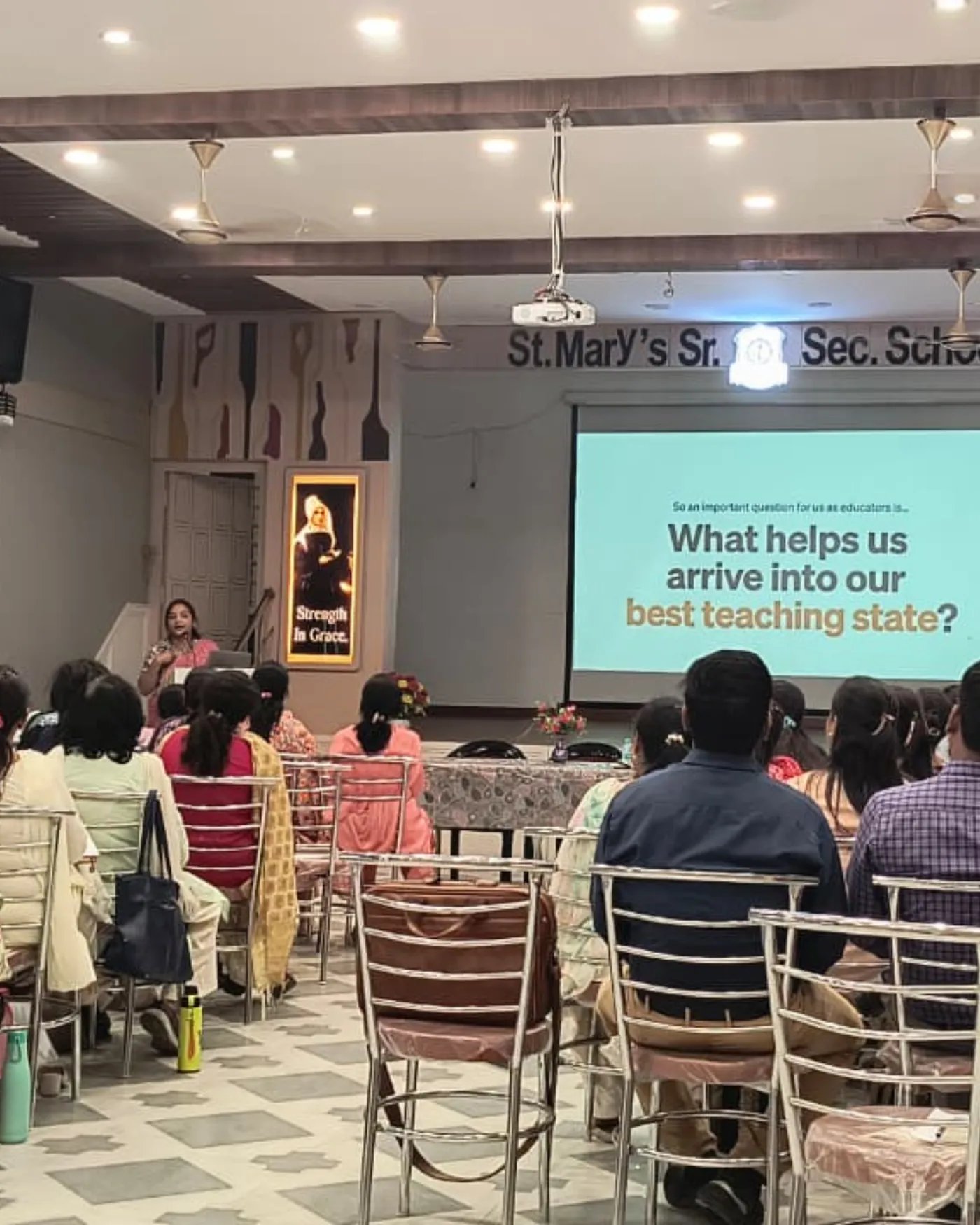
Teachers carry far more than the curriculum
Teachers work within increasingly complex educational environments.
Alongside curriculum delivery and academic responsibilities, they are expected to manage classroom relationships, learner behaviour, institutional expectations, parental communication, emotional needs of children, documentation, assessment, and continuous change in educational practices.
Stress, emotional fatigue, repeated classroom challenges, interpersonal dynamics, workload and professional expectations can influence a teacher's energy, mindset, communication, behaviour and sense of wellbeing.
teacher
These demands affect not only what teachers do, but also how they experience their work.
A continuous relationship between the teacher's inner and outer worlds
Kosha Shiksha is based on the understanding that the internal environment of the teacher and the external environment in which the teacher functions keep shaping each other.
A teacher's internal state may affect
- Communication
- Tone and behaviour
- Classroom relationships
- Interpretation of learner behaviour
- Response to conflict
- Patience and emotional availability
- Decision-making
- The overall learning environment
External factors may influence the teacher's wellbeing
- Workload
- Learner behaviour
- Institutional culture
- Interpersonal relationships
- Time pressure
- Professional expectations
These affect the teacher's physical, emotional and mental wellbeing.
The purpose is not to eliminate external challenges, but to strengthen the educator's ability to understand and manage their own responses within those challenges.
The teacher, as a person and as a professional
Kosha Shiksha is designed primarily as a mindset, awareness and wellbeing-oriented training.
A teacher's ability to learn, apply and sustain professional skills is influenced by their mindset, emotional state, self-awareness, relationships and overall wellbeing. By working at this foundational level, Kosha Shiksha enables educators to engage more effectively with their existing skills, remain more open to learning new ones, and use their professional capabilities with greater awareness and consistency.
The focus is on how teachers think, feel, respond, relate, interpret situations, manage internal states and engage with the environment around them.
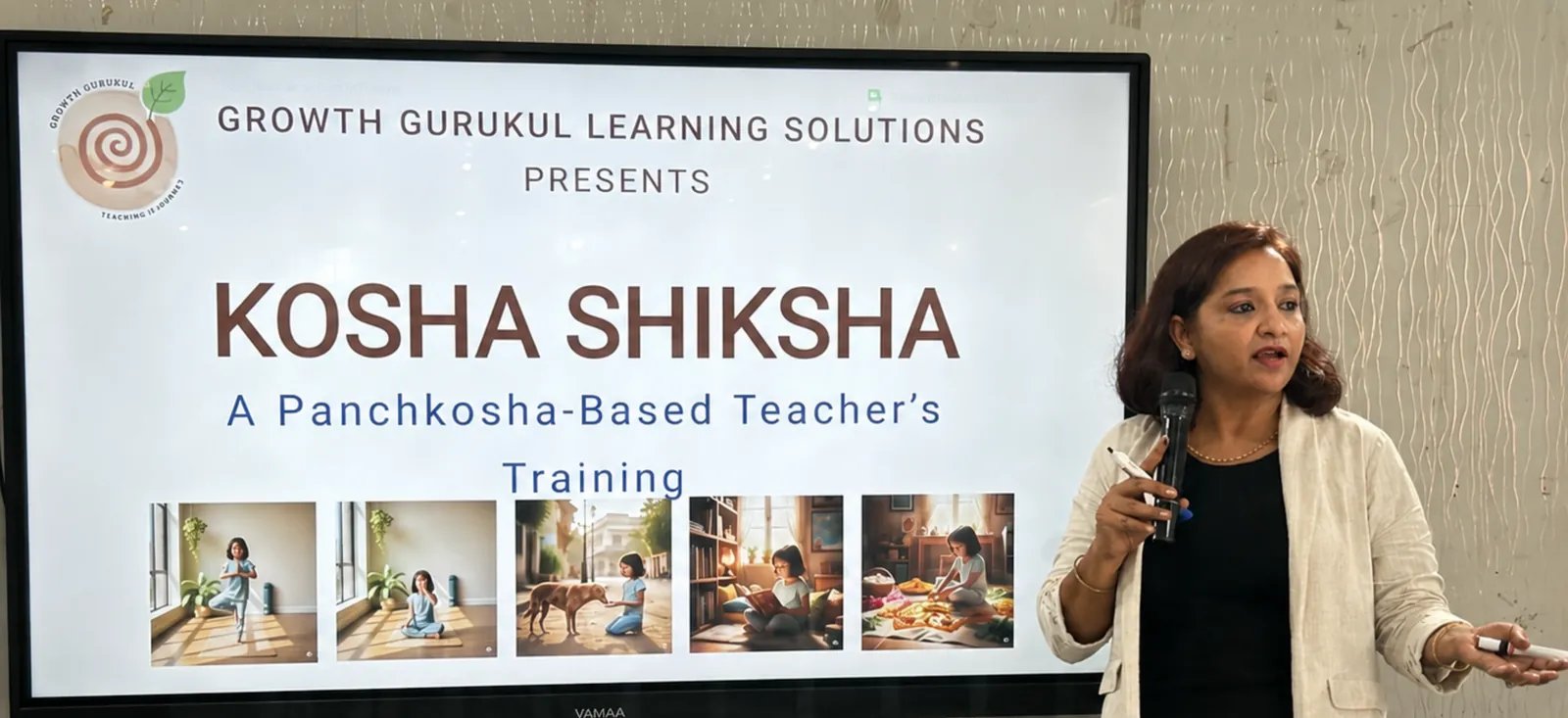
The programme enables educators to examine
- Their mindset and patterns of thinking
- Emotional responses and triggers
- Behaviour and communication patterns
- Stress and energy levels
- Relationships with learners and colleagues
- Their responses to challenging situations
- The influence of the external environment on their internal state
- The influence of their internal state on their behaviour and surroundings
- Their sense of meaning, purpose and wellbeing as educators
The objective is not to prescribe an ideal way of behaving, but to build self-awareness, reflection, regulation and conscious response.
Five interconnected dimensions of the educator
Kosha Shiksha is rooted in the Panchakosha framework of Indian Knowledge Systems. The five Koshas offer a holistic framework for the different but interconnected dimensions of human experience.
It allows teacher wellbeing to be understood beyond isolated stress-management practices.
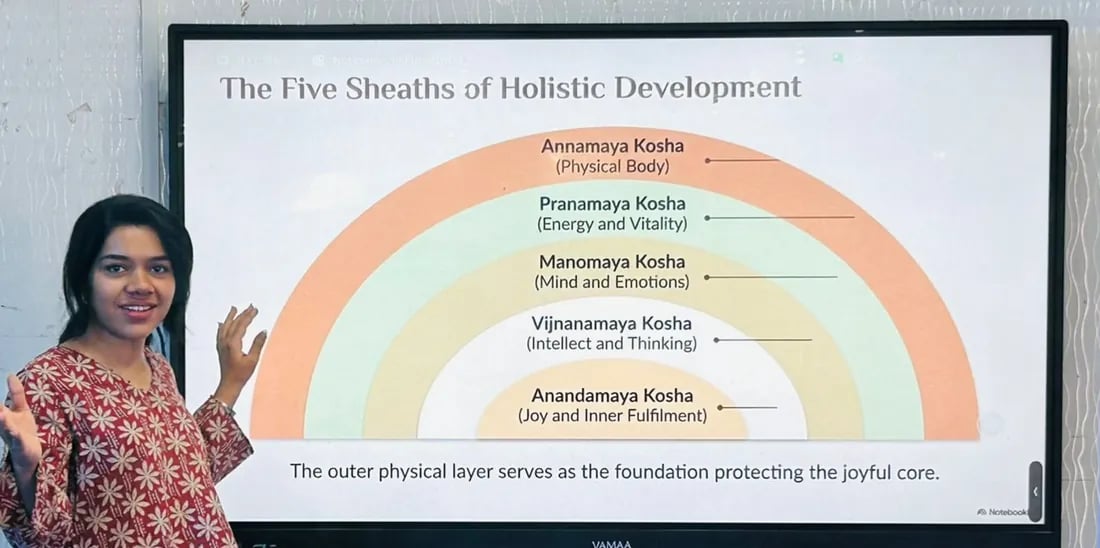
Educators explore how physical health, energy, emotions, thoughts, beliefs, reflection, relationships and sense of purpose interact with one another.
Key areas of Kosha Shiksha
The exact emphasis may vary according to the needs of the school, institution or educator group.
Experienced, not just explained
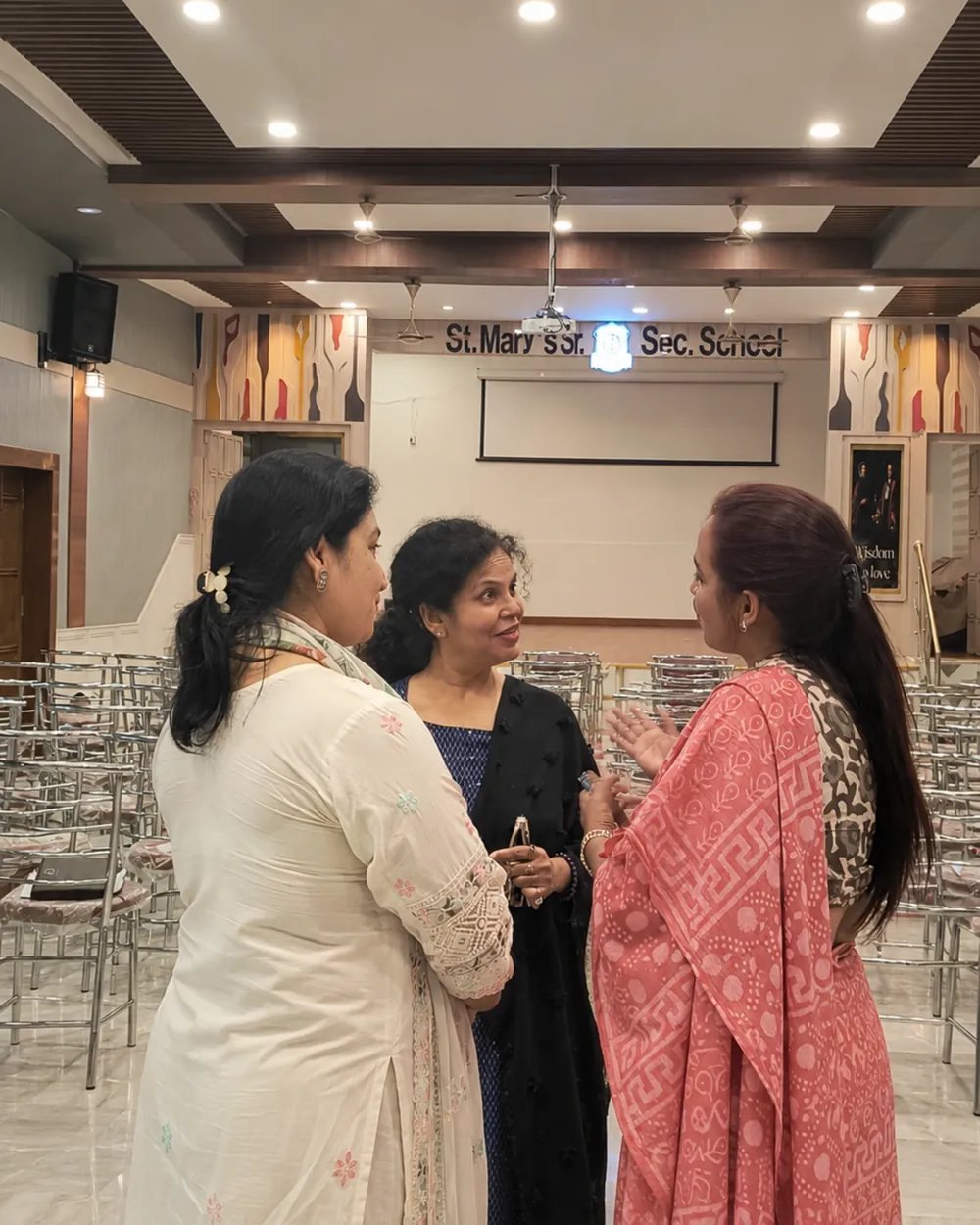
Kosha Shiksha is an experiential and reflective programme. It does not rely only on lectures or theory. Participants engage with ideas through personal experience, observation, reflection and dialogue.
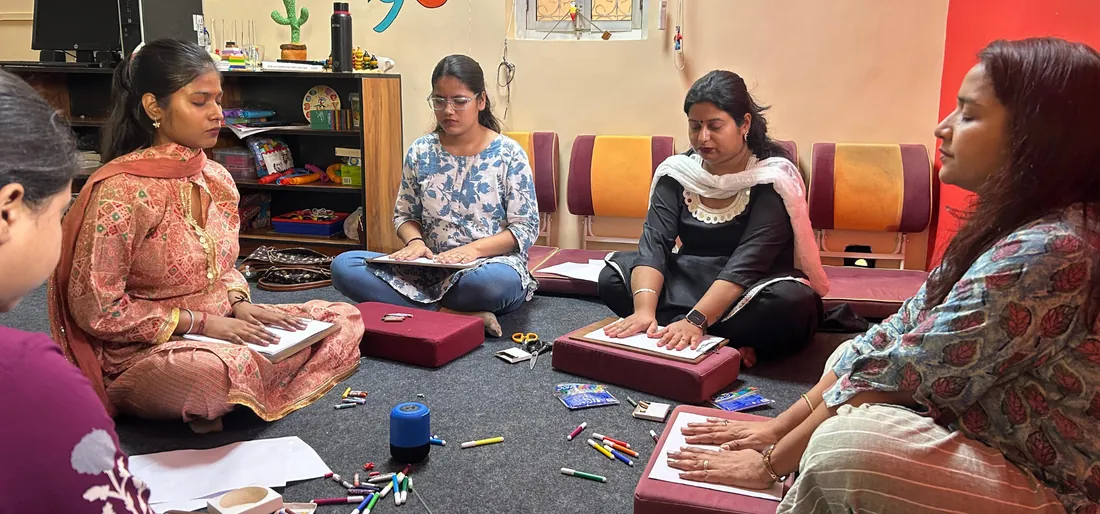
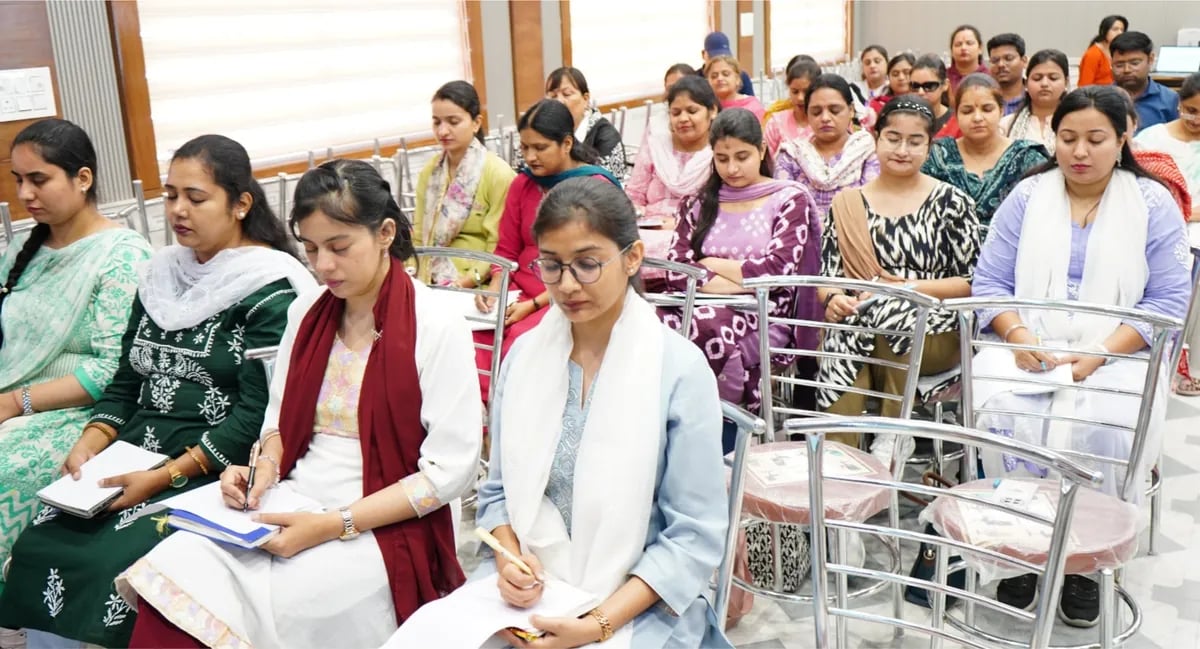
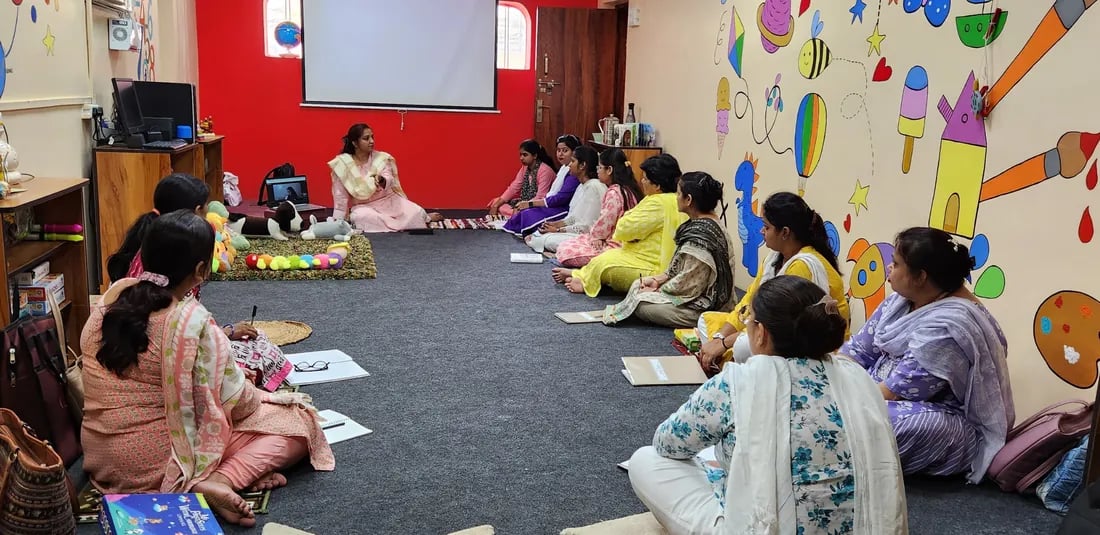
Depending on the programme design, sessions may include
The intention is to create a safe and reflective learning environment where educators can examine their own experiences rather than only receive information.
A gradual shift in awareness and response
It may include movement:
Transformation is understood as a process, rather than a single training outcome.
What educators may develop
- Greater self-awareness
- Stronger understanding of their own emotional and behavioural patterns
- Increased awareness of stress and triggers
- Improved ability to observe before reacting
- Greater consciousness in communication and relationships
- Understanding of the connection between their internal state and external environment
- Greater reflective capacity
- Stronger awareness of personal wellbeing
- Greater emotional steadiness
- A deeper connection with their role and purpose as educators
- Greater readiness to learn, adopt and apply professional skills effectively
These changes can positively influence not only teacher wellbeing, but also professional performance, teacher–learner relationships and the emotional culture of the classroom.
Skills stand on a human foundation
Professional skills are essential to effective teaching. The ability to acquire and apply them is closely connected with the educator's mindset, emotional state, self-awareness, openness to learning and overall wellbeing.
- Make more effective use of skills they already possess
- Remain more receptive to learning new skills
- Adapt to changing educational requirements
- Translate professional knowledge into consistent practice
- Sustain professional development over time
Designed around your institution
Kosha Shiksha can be offered as:
Introductory workshops
Intensive teacher-development programmes
School-based teacher wellbeing programmes
Periodic reflective sessions
Reinforcement and follow-up programmes
Longer institutional teacher-development journeys
What educators said afterwards
I thought I would find it difficult to sit through the meditation, but I actually needed that quiet time. During the drawing activity, I realised how tired I had been feeling. It was nice to be asked how I was doing and have time to answer.
What I liked was that the teachers felt comfortable talking. A few who usually say very little in a training session opened up during the reflections. We stayed back afterwards and talked about how to make space for these conversations in school.
The Panchakosha discussion made sense when we connected it to our own day. If I haven't slept properly or I'm worried about something, it does affect my patience. I knew that, of course, but I hadn't really stopped to look at it. Now I try to catch myself before I snap.
Before you plan a programme
Anything else? Message us on WhatsApp or call +91 92177 06551.
Is this training on how to teach a curriculum?
No. Kosha Shiksha is a mindset, awareness and wellbeing-oriented programme focused on the teacher as a person and a professional. (Schools adopting the Kosha Vidya kit receive free Panchakosha Teacher Certification, which covers teaching the kit itself.)
Does it replace professional skills training?
No. It works on the foundation that supports professional capability, so that teachers make better use of skills they already have and stay more receptive to learning new ones.
Is it lectures and slides?
No. It is experiential and reflective: guided meditation, breath awareness, journaling, art-based reflection, discussions, case situations and facilitated conversations, depending on the programme design.
Can it be conducted online?
Yes. Sessions may be conducted offline or online, and are customised according to the context and needs of the institution.
How long is a programme?
It ranges from an introductory workshop to intensive programmes, periodic reflective sessions, follow-up programmes and longer institutional journeys. We'll suggest a format based on your goals and your educators.
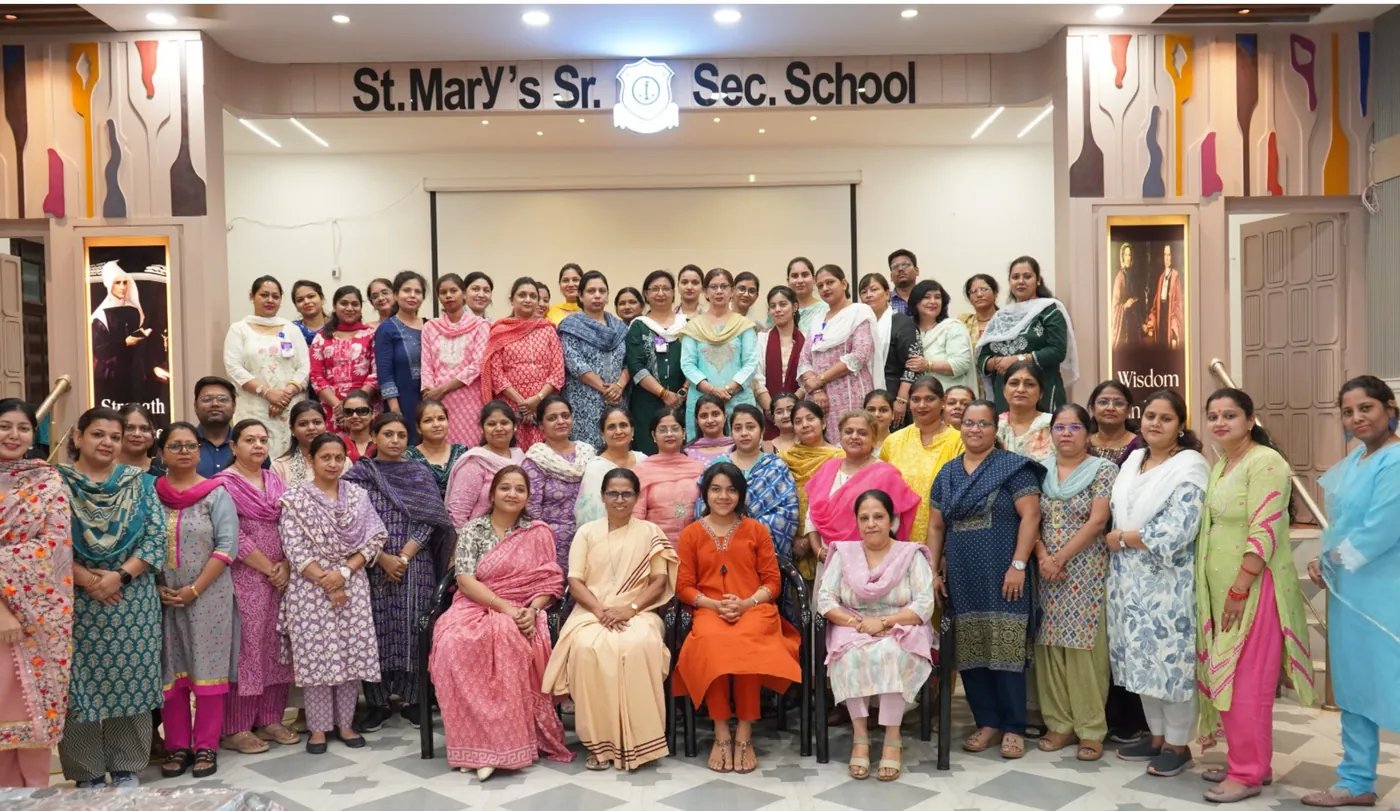
Teachers cannot be viewed only as deliverers of curriculum
They are human beings whose physical state, emotions, thoughts, beliefs, relationships, energy and sense of purpose influence the educational spaces they create.
Kosha Shiksha seeks to develop educators who are more aware, reflective, balanced and conscious in the way they relate to themselves, their profession and the people around them.
The teacher, as the starting point of meaningful educational change.

Tell us about your educators and what they are carrying right now.
We'll suggest a format, from a first workshop to a longer journey, shaped around your school.
Suprabha JhaFounder, Growth Gurukul Learning Solutions
Plan a Kosha Shiksha programme
Share a few details and we'll get in touch to understand your educators and suggest a format.